
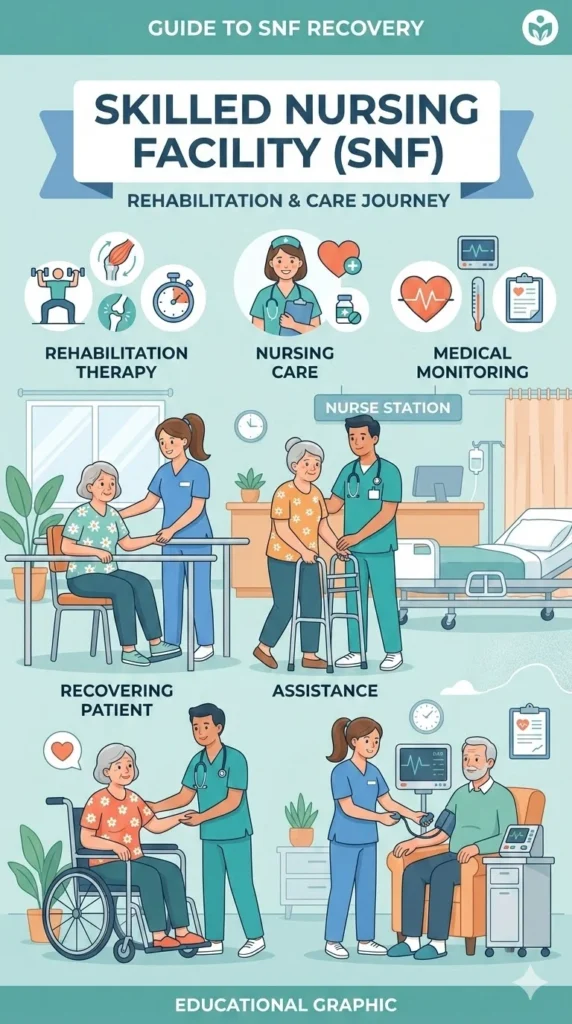

SNF in medical terms stands for Skilled Nursing Facility. It refers to a healthcare facility that provides specialized medical care, rehabilitation services, and nursing support for patients who require professional treatment after hospitalization or during recovery from illness or injury.
Medical terminology often includes abbreviations that simplify communication between healthcare professionals. However, these shortened terms can be confusing for patients, caregivers, or anyone reading medical records for the first time. One of these commonly used healthcare abbreviations is SNF.
You may see the term SNF in hospital discharge papers, medical insurance documents, or discussions about patient care plans. Understanding what SNF means in medical terms can help patients and families make informed decisions about recovery and long term care.
In this comprehensive guide, you will learn the exact meaning of SNF, how skilled nursing facilities work, when patients need them, how they differ from similar care settings, and how the term is used in real healthcare situations.
What Does SNF Mean in Medical Terms?
In healthcare, SNF stands for Skilled Nursing Facility.
A Skilled Nursing Facility is a licensed medical care center that provides professional nursing care, therapy services, and medical supervision for patients who need more support than home care but do not require full hospitalization.
Patients are often transferred to an SNF after leaving the hospital when they still need medical monitoring or rehabilitation.
Common services provided in an SNF include:
- 24 hour nursing care
- Physical therapy
- Occupational therapy
- Speech therapy
- Medication management
- Post surgical recovery support
- Wound care
Because these services require trained healthcare professionals, they are considered skilled medical services.
The Role of Skilled Nursing Facilities in Healthcare
Skilled Nursing Facilities play an important role in the healthcare system. They help patients transition safely from hospital care to independent living.
After a serious illness, surgery, or injury, many patients are not ready to go straight home. However, they also do not need the intensive treatment provided in a hospital. At this stage, a Skilled Nursing Facility offers the right level of care.
For example, patients recovering from surgeries, strokes, or severe infections often benefit from the medical supervision available in these facilities. In addition, rehabilitation specialists help patients regain mobility and daily living skills.
As a result, SNFs act as an important bridge between hospital treatment and full recovery.
When Patients Are Sent to an SNF
Doctors may recommend a Skilled Nursing Facility when a patient needs continued medical attention after leaving the hospital.
Several situations commonly lead to SNF care.
1. Post Surgery Recovery
Many patients require therapy and monitoring after major operations.
Examples include:
- Hip replacement surgery
- Knee replacement surgery
- Heart surgery
- Spinal procedures
During recovery, nursing staff manage medications, monitor healing, and assist with rehabilitation.
2. Rehabilitation After Injury or Illness
Some patients need structured therapy to regain strength and independence.
Common cases include:
- Stroke recovery
- Serious fractures
- Neurological conditions
- Severe infections
In these cases, physical and occupational therapists work with patients daily.
3. Complex Medical Care Needs
Some individuals require specialized medical treatment that cannot be easily provided at home.
Examples include:
- Wound care management
- Intravenous medications
- Respiratory therapy
- Monitoring chronic health conditions
Because skilled professionals are required, these services are typically offered in an SNF.
Services Provided in a Skilled Nursing Facility
A Skilled Nursing Facility provides several healthcare services that go beyond standard residential care.
Medical and Nursing Services
These facilities are staffed with licensed nurses and medical professionals who monitor patients regularly.
Typical services include:
- Medication administration
- Vital sign monitoring
- Post surgical care
- Chronic disease management
Rehabilitation Therapy
Rehabilitation services are a major part of SNF care.
These may include:
- Physical therapy to restore movement
- Occupational therapy to help with daily activities
- Speech therapy for communication or swallowing issues
Because therapy is usually provided multiple times per week, patients can recover faster.
Daily Living Assistance
In addition to medical treatment, patients often receive help with everyday activities.
Examples include:
- Bathing and grooming
- Dressing
- Mobility assistance
- Meal support
This assistance ensures patient safety while recovery continues.
Example Situations Where SNF Is Used
Understanding how healthcare professionals use the term SNF becomes easier when looking at real medical contexts.
Hospital Discharge Example
A doctor might say:
The patient will be discharged tomorrow and transferred to an SNF for rehabilitation.
This means the patient still needs professional medical care before returning home.
Insurance Documentation Example
An insurance report may state:
Coverage includes up to twenty days of SNF care following hospitalization.
Here, the term indicates medical services provided at a Skilled Nursing Facility.
Care Planning Discussion
A nurse might explain:
Your father will stay in an SNF until he regains strength after surgery.
In this case, the facility supports recovery and rehabilitation.
SNF Compared with Other Healthcare Facilities
People often confuse Skilled Nursing Facilities with other types of care centers. However, they serve different purposes.
Healthcare Facility Comparison
| Facility Type | Level of Medical Care | Typical Purpose |
|---|---|---|
| Skilled Nursing Facility | High level medical supervision | Recovery and rehabilitation |
| Nursing Home | Long term residential care | Support for elderly individuals |
| Assisted Living | Moderate assistance | Help with daily activities |
| Hospital | Intensive medical treatment | Acute illness or emergencies |
While hospitals provide short term critical care, SNFs focus on recovery and ongoing medical support.
How Long Patients Usually Stay in an SNF
The length of stay in a Skilled Nursing Facility varies depending on the patient’s condition.
Some patients stay only a few days, while others may remain for several weeks.
Typical durations include:
- Short term rehabilitation stays
- Recovery after surgery
- Transitional care before returning home
Healthcare providers regularly evaluate progress to determine when a patient is ready for discharge.
Alternate Meanings of SNF
Although SNF most commonly refers to Skilled Nursing Facility in healthcare, the abbreviation may have different meanings in other industries.
Examples include:
- Standard Neutral Format in computing
- Simple Network Framework in technology
- Special Nutrition Formula in food science
However, in medical contexts, SNF almost always refers to Skilled Nursing Facility.
Polite and Professional Alternatives
In some situations, healthcare professionals may use different wording instead of the abbreviation SNF.
Common alternatives include:
- Skilled nursing center
- Post acute care facility
- Rehabilitation nursing facility
- Transitional care facility
These terms describe similar medical services while sounding clearer for patients and families.
Frequently Asked Questions
1. What does SNF stand for in medical terms?
SNF stands for Skilled Nursing Facility, a healthcare center that provides medical care and rehabilitation services after hospitalization.
2. Is a Skilled Nursing Facility the same as a nursing home?
Not exactly. Skilled Nursing Facilities provide medical treatment and therapy, while nursing homes mainly offer long term residential care.
3. Who typically goes to an SNF?
Patients recovering from surgery, illness, injury, or hospitalization often stay in an SNF for rehabilitation and medical supervision.
4. Do doctors work in Skilled Nursing Facilities?
Yes. Doctors oversee patient care, while nurses and therapists provide daily treatment.
5. How long can someone stay in an SNF?
The length of stay depends on the patient’s medical condition and recovery progress.
6. Is SNF care covered by insurance?
In many cases, health insurance or government healthcare programs cover SNF care for a limited time after hospitalization.
7. Can patients return home after SNF care?
Yes. Many patients move to an SNF temporarily until they are healthy enough to return home safely.
8. What services are usually available in an SNF?
Common services include nursing care, rehabilitation therapy, medication management, and assistance with daily activities.
Conclusion
Understanding what SNF means in medical terms helps patients and families navigate healthcare decisions with confidence. In simple terms, SNF stands for Skilled Nursing Facility, a medical center designed to support recovery and rehabilitation after hospitalization.
Key points to remember include:
- SNF means Skilled Nursing Facility
- These facilities provide professional medical and rehabilitation services
- Patients often stay in an SNF after surgery or serious illness
- Skilled nursing care helps bridge the gap between hospital treatment and returning home
With trained healthcare staff, therapy programs, and medical supervision, Skilled Nursing Facilities play a vital role in helping patients regain independence and recover safely.
discover more post
WYO Meaning in Text: What Does WYO Stand For? for 2026
EYP Meaning in Text What It Stands For and How to Use It for …
TS Meaning in Text: What Does TS Stand For in Messages? in …