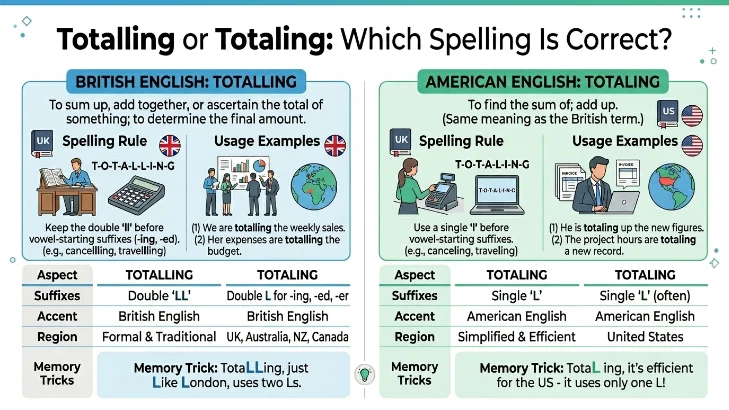

Both totalling and totaling are correct spellings, but they are used in different types of English. Totalling is the preferred spelling in British English, while totaling is the standard spelling in American English.
Many English learners become confused about totalling or totaling because both spellings appear online, in books, and in professional writing. Unlike some spelling mistakes, this is not a case where one word is correct and the other is wrong.
The answer depends on whether you are writing in British English or American English.
In British English, the preferred spelling is totalling with two letters l. In American English, the standard spelling is totaling with one l.
Understanding this difference is important for students, bloggers, business professionals, and anyone who writes in English. Using the correct regional spelling makes your writing look professional and consistent.
This guide explains everything you need to know about totalling or totaling, including grammar rules, meanings, examples, regional differences, common mistakes, and practical tips.
Quick Answer About Totalling or Totaling
| Word | Correct? | Usage |
|---|---|---|
| Totalling | ✓ Yes | British English |
| Totaling | ✓ Yes | American English |
Simple Rule
- British English = Totalling
- American English = Totaling
Both spellings have the same meaning.
What Do Totalling and Totaling Mean?
The words totalling and totaling are the present participle forms of the verb total.
The verb total means:
- To add numbers together.
- To reach a final amount.
- To equal a particular sum.
Examples
- The expenses are totaling more than $1,000.
- The bill is totalling £800.
- We are totaling the sales figures.
In every sentence, the meaning remains exactly the same.
What Part of Speech Are Totalling and Totaling?
Both words are forms of the verb total.
They can function as:
- A present participle
- A verb in continuous tenses
- An adjective in some contexts
Examples as Verbs
- The accountant is totaling the invoices.
- The company is totalling its yearly expenses.
Examples as Adjectives
- The totaling machine stopped working.
- The totalling process took several hours.
Why Are There Two Spellings?
The difference comes from the spelling rules of British and American English.
American English often prefers simpler spellings.
Examples include:
| British English | American English |
|---|---|
| Travelling | Traveling |
| Cancelling | Canceling |
| Labelling | Labeling |
| Totalling | Totaling |
British English usually doubles the final l before adding -ing, while American English often keeps only one l.
The Spelling Rule Behind Totalling and Totaling
The base word is:
Total
When adding -ing, different English varieties follow different conventions.
British Rule
Total + ling = Totalling
American Rule
Total + ing = Totaling
This difference occurs because of regional spelling preferences rather than grammar mistakes.
British English Usage
In the United Kingdom, Australia, and many Commonwealth countries, totalling is considered the standard spelling.
Examples
- The repairs are totalling £2,000.
- The company’s expenses are totalling more than expected.
- The damages are totalling millions of pounds.
If you are writing for a British audience, totalling is usually the better choice.
American English Usage
In the United States, totaling is the preferred spelling.
Examples
- The repairs are totaling $2,000.
- The damages are totaling millions of dollars.
- We are totaling the expenses.
If your audience is primarily American, use totaling.
Is One Spelling More Correct?
No.
Both spellings are correct.
The key is consistency.
If you are writing in British English, use totalling throughout your document.
If you are writing in American English, use totaling consistently.
Mixing the two styles in one document can make your writing appear unprofessional.
Why Do People Search for Totalling or Totaling?
Many people believe that one spelling must be wrong because spell-check tools sometimes highlight one version.
This usually happens because:
- The software is set to American English.
- The software is set to British English.
- Writers are unfamiliar with regional spelling differences.
Totalling or Totaling in Everyday English
These words are common in daily communication.
Finance
- The expenses are totaling $500.
- The expenses are totalling £500.
Shopping
- My purchases are totaling more than I expected.
Travel
- Our hotel costs are totalling nearly £1,000.
Business
- The invoices are totaling several thousand dollars.
Totalling or Totaling in Accounting
Accountants frequently use these terms.
Examples:
- The accountant is totaling the receipts.
- The accountant is totalling the expenses.
Both sentences are correct depending on regional English.
Totalling or Totaling in Business Writing
Business professionals often write:
- Sales are totaling $5 million.
- Expenses are totalling £3 million.
The meaning is identical.
The difference is purely regional.
Totalling or Totaling in Academic Writing
Academic institutions generally follow a style guide.
Examples include:
- American universities often use totaling.
- British universities usually prefer totalling.
Students should follow the style requirements of their institution.
Common Phrases With Totalling and Totaling
- Totalling expenses
- Totaling expenses
- Totalling costs
- Totaling costs
- Totalling sales
- Totaling sales
- Totalling figures
- Totaling figures
These phrases frequently appear in business reports and financial documents.
Real World Examples
Example One
The repairs are totaling $10,000.
Example Two
The damages are totalling £7,000.
Example Three
The company is totaling its yearly sales.
Example Four
The organization is totalling its expenses.
Advantages of Using the Correct Regional Spelling
Improves Professionalism
Readers expect consistent spelling.
Builds Credibility
Correct spelling makes documents appear trustworthy.
Matches Audience Expectations
American readers prefer totaling, while British readers prefer totalling.
Disadvantages of Mixing Spellings
Creates Inconsistency
Documents may look poorly edited.
Confuses Readers
Readers may wonder which style guide you are following.
Looks Unprofessional
Businesses and academic institutions often expect one consistent spelling system.
Comparison Table: Totalling or Totaling
| Feature | Totalling | Totaling |
|---|---|---|
| Correct spelling | Yes | Yes |
| British English | Yes | Rare |
| American English | Rare | Yes |
| Meaning | Same | Same |
| Pronunciation | Same | Same |
Totalling vs Totaling vs Total
| Word | Function |
|---|---|
| Total | Base verb |
| Totalling | British participle |
| Totaling | American participle |
Examples:
- We need to total the expenses.
- We are totalling the expenses.
- We are totaling the expenses.
Common Mistakes With Totalling or Totaling
Mistake One
Thinking one spelling is incorrect.
Correct: Both are correct.
Mistake Two
Mixing British and American spelling.
Incorrect:
The company is totaling expenses and cancelling projects.
This mixes American and British spellings.
Better Options
- Totaling and canceling.
- Totalling and cancelling.
Mistake Three
Changing spellings randomly within one document.
Choose one style and remain consistent.
Memory Tricks for Remembering the Difference
Trick One
British English often doubles l.
Examples:
- Travelling
- Labelling
- Cancelling
- Totalling
Trick Two
American English often uses a single l.
Examples:
- Traveling
- Labeling
- Canceling
- Totaling
Trick Three
Remember:
British = Double L
American = Single L
Exercises With Answers
Choose the Correct Answer for British English
- The expenses are _____ £500.
Answer: Totalling
- The damages are _____ thousands of pounds.
Answer: Totalling
Choose the Correct Answer for American English
- The expenses are _____ $500.
Answer: Totaling
- The sales are _____ millions of dollars.
Answer: Totaling
Correct the Sentence
The company is totaling its costs.
(British English)
Correct:
The company is totalling its costs.
Correct the Sentence
The company is totalling its expenses.
(American English)
Correct:
The company is totaling its expenses.
Frequently Asked Questions
Which is correct, totalling or totaling?
Both are correct. The choice depends on whether you are using British or American English.
Is totalling British English?
Yes. British English generally prefers totalling with two letters l.
Is totaling American English?
Yes. American English typically uses totaling with one l.
Do totalling and totaling have different meanings?
No. Both words mean exactly the same thing.
Why are there two spellings of totaling?
The difference comes from regional spelling conventions between British and American English.
Can I use both spellings in one document?
It is better to choose one style and use it consistently.
Which spelling should I use in academic writing?
Follow your university’s style guide or regional English preference.
Which spelling is used in business writing?
Businesses usually follow the English style of their country or target audience.
Do dictionaries accept both spellings?
Yes. Most major dictionaries recognize both forms.
How can I remember the difference between totalling and totaling?
Remember that British English often doubles the letter l, while American English usually keeps one l.
Conclusion
The answer to totalling or totaling is simple: both spellings are correct.
The only difference is regional usage. Totalling is the preferred spelling in British English, while totaling is the standard form in American English. The meaning, pronunciation, and grammatical function remain exactly the same.
When writing, focus on consistency. If your audience uses British English, choose totalling. If your audience uses American English, use totaling.
Understanding regional spelling differences can improve your writing, make your work appear more professional, and help you communicate effectively with readers around the world.